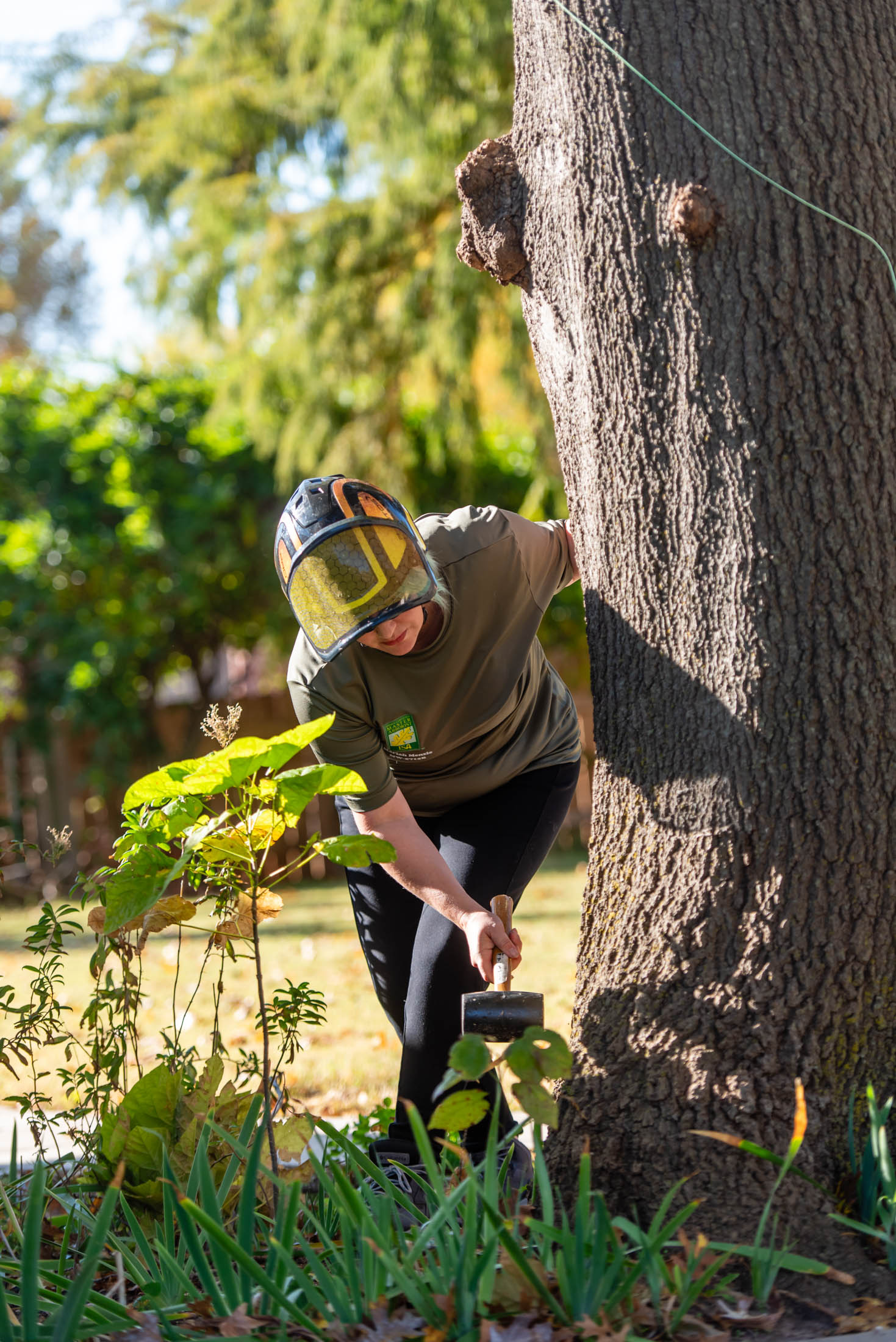
Managing risk is an essential part of tree ownership. Using the ISA Tree Risk Assessment Qualification (TRAQ) methodology, we provide a systematic, objective evaluation of tree structure. We assess the likelihood of failure and the potential consequences, giving you a clear, graded risk rating so you can prioritize safety without unnecessary removal.
Levels of Assessment
Tree risk assessments are tailored to the situation at hand. The ISA recognizes three levels of assessment, each providing different depths of evaluation:
Level 1
Limited Visual Assessment
Hover to learn moreA walkthrough survey of trees in a defined area, typically from a set path or route. This level identifies obvious defects and flags trees that may need closer inspection.
Ideal for: Large properties, municipal inventories, or post-storm reconnaissance.
Level 2
Basic Assessment
Hover to learn moreThis is where most clients start. A detailed visual inspection of individual trees from ground level, walking the full circumference. We evaluate roots, trunk, branches, and canopy for structural defects and decay.
Ideal for: Most tree risk situations requiring thorough evaluation.
Level 3
Advanced Assessment
Hover to learn moreWhen Level 2 identifies concerns requiring further investigation. May include resistograph drilling, aerial inspection, root collar excavation, or sonic tomography.
Note: We'll discuss options and costs with you before proceeding.
The TRAQ Methodology
Tree Risk Assessment Qualification (TRAQ) is the industry-standard systematic approach to evaluating tree-related hazards. Unlike subjective "looks dangerous" opinions, TRAQ provides a structured framework that considers three key factors:
- Likelihood of Failure: Probability that a tree or tree part will fail based on structural defects, decay, load factors, and environmental conditions
- Likelihood of Impact: Probability that a failed tree or part will actually strike a target (person, building, vehicle) based on occupancy patterns and target characteristics
- Consequences of Impact: Potential severity of harm or damage if impact occurs
These factors combine to produce a risk rating (Low, Moderate, High, or Extreme) that guides management decisions.
Assessment Process
A professional tree risk assessment includes:
- Visual inspection of tree structure from ground level
- Evaluation of root collar, trunk, scaffold branches, and canopy
- Identification of structural defects, decay, weak attachments, and load imbalances
- Site condition assessment including soil, drainage, and exposure
- Target evaluation and occupancy analysis
- Risk rating determination using TRAQ matrix
- Mitigation recommendations tailored to the specific risk level
When Risk Assessment Is Needed
Professional risk assessment is valuable when:
- Trees overhang high-traffic areas, buildings, or valuable property
- Visible defects or damage raise safety concerns
- Storm events have stressed or damaged trees
- Property managers need documented risk evaluation for liability protection
- Municipal tree ordinances require assessment before removal permits
- Insurance requirements mandate professional evaluation
- Disputed tree removal decisions need objective technical analysis
Advanced Assessment Tools
For trees where ground-level inspection is insufficient, we utilize advanced diagnostic tools:
- Resistograph drilling to measure internal wood density and detect decay
- Aerial inspection via climbing or aerial lift for detailed crown evaluation
- Root collar excavation to expose below-ground structural issues
- Sonic tomography for detailed decay mapping in critical trees
Wind Risk Assessment
Wind is one of the primary forces that causes tree failure. Our wind risk assessment evaluates how trees respond to wind loading, considering factors such as:
- Crown Density & Shape: Dense, asymmetrical crowns catch more wind and create uneven stress
- Site Exposure: Trees in open areas or on hilltops face greater wind loads than sheltered trees
- Root Stability: Soil conditions, root depth, and root plate integrity affect anchorage
- Structural Defects: Cracks, decay, and weak branch attachments are more likely to fail under wind stress
- Recent Changes: Trees newly exposed by removal of neighboring trees may be at higher risk until they adapt
Understanding wind risk helps prioritize mitigation efforts and identify trees that may need crown reduction, cabling, or closer monitoring during storm seasons.
Risk Mitigation Options
Not all risky trees require removal. Depending on the assessment findings, we may recommend:
- Pruning: Removing hazardous branches, reducing end weight, or eliminating weak attachments
- Cabling & Bracing: Installing support systems to reduce failure likelihood of co-dominant stems or weak unions
- Crown Reduction: Decreasing overall tree height or spread to reduce wind load and failure potential
- Target Modification: Moving or protecting targets rather than removing the tree
- Monitoring: Scheduling re-inspection for trees with developing defects
- Removal: Recommended only when risk cannot be adequately mitigated by other means